
ideas
Acoustic panels for a home office or study
7 August 2026
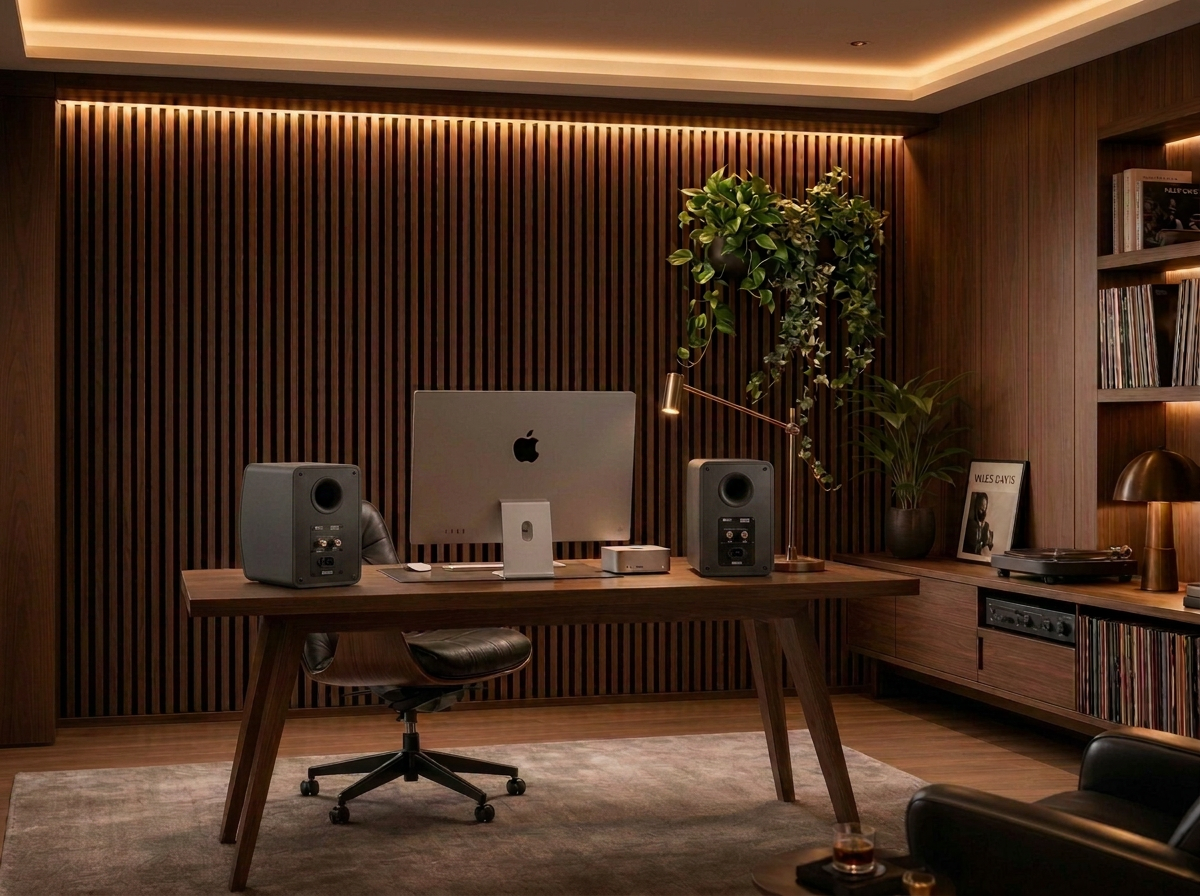
How to reduce echo without making a room look like a recording studio.
A home office or study in a British or Hong Kong flat is usually a spare bedroom or a corner of an open-plan living room. The problem is rarely loud noise — it is the flutter and echo that make video calls tiring and concentration harder.
Treat the biggest empty surfaces first
Sound bounces off flat plaster, glass and timber floors. The wall behind the desk and the ceiling above it are the two surfaces that matter most. Treating just those two areas often halves the reverberation time in a small room.
Use absorption that looks like joinery
Perforated timber panels backed with acoustic felt read as wall panelling, not studio foam. A slatted American black walnut panel with a black acoustic fabric behind it absorbs mid and high frequencies while adding warmth to the room.
Build it into the furniture
A full-height bookcase with an acoustic backing panel, a desk with a felt-lined modesty panel, or a headboard with integrated absorption all reduce echo without claiming extra wall space. The furniture does two jobs.
Do not cover every surface
Total deadening feels unnatural. We aim for about 25–30% coverage of the main reflecting surfaces, placed where the speaker and microphone are. The rest of the room stays lively enough for conversation.
Lead time
Acoustic joinery is drawn, made and installed in the same 10–14 week programme as the rest of a room set. Send a photograph of the room and we will suggest the best placement.
Start your own commission
Send us a floor plan and we'll come back with a preliminary assessment before any site visit.
Contact us