
Acoustic panels
Acoustic panels. Not just quiet — beautiful.
Hard floors, glass and plaster make rooms bright but loud. Acoustic panelling absorbs the reflections that blur speech and tire the ear — and, done as joinery, it becomes the best-looking wall in the house.
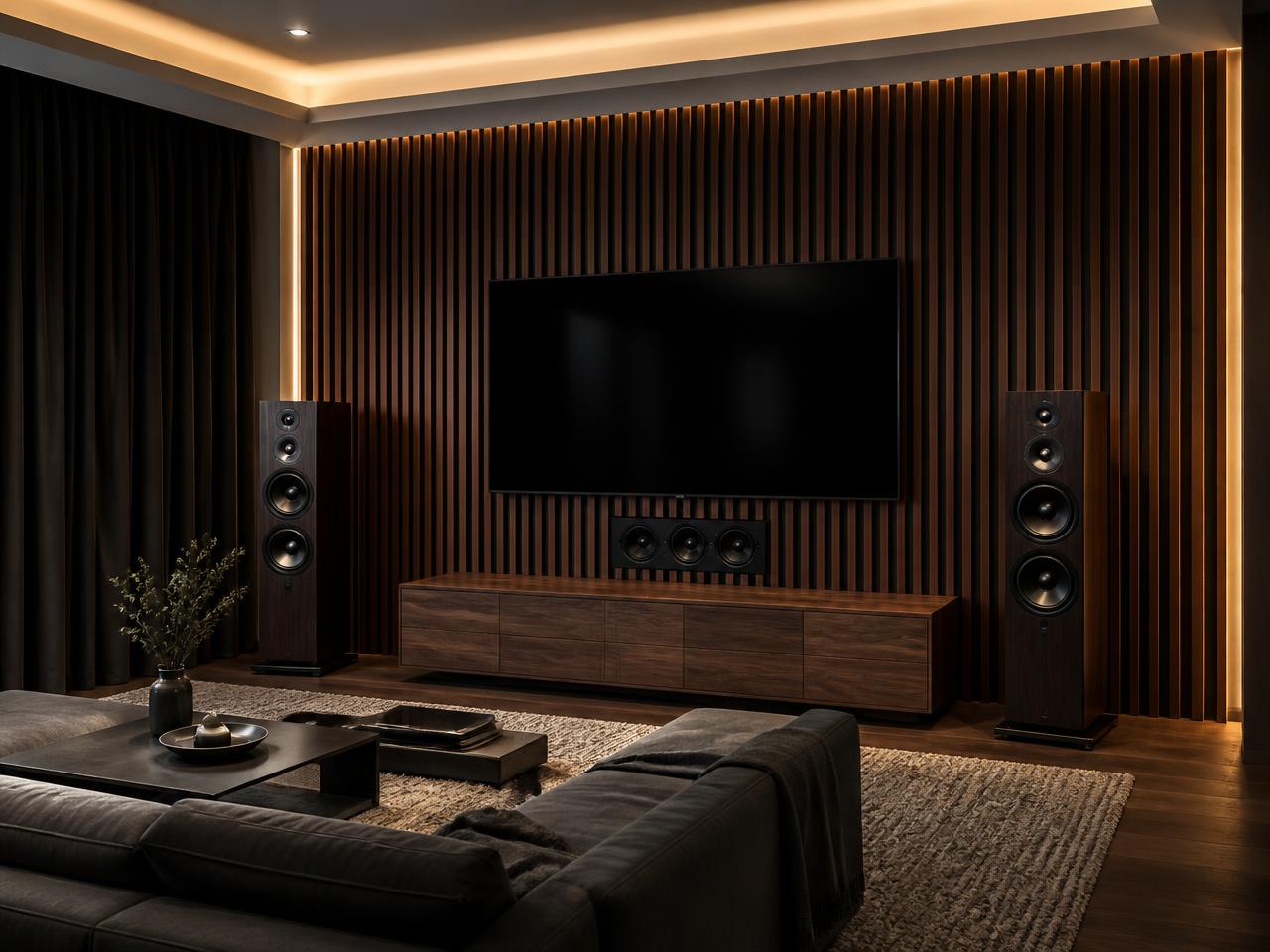
The aesthetic case
Slatted timber is a rhythm, not a product. We set slat width and gap to the proportions of the wall, run the grain continuously across doors and returns, and finish the panels in the same hardwax oil as the furniture so the room reads as one piece of work.
- Vertical walnut, oak or fluted slats over black or charcoal acoustic felt
- Slat and gap rhythm proportioned to the wall, with grain matched across joints
- Panels used to hide doors, risers, service panels and TV cabling
- Curved and returned panels to soften a corner or wrap a column
- PET felt in colour for studies, playrooms and ceilings where timber is too heavy
The practical case
Absorption is measured, not guessed. We aim at the frequencies that matter for speech and screens, treat the surfaces that actually reflect, and leave the rest of the room live enough to feel natural.
- Shorter reverberation: clearer dialogue on TV calls and film, less listening fatigue
- Treat first reflection points — side walls, the wall behind the screen, and the ceiling
- Around 20–30% of hard surface area is usually enough for a domestic room
- Slat-on-felt assemblies typically reach NRC 0.55–0.85 depending on backing and air gap
- A 25–50mm air gap or mineral wool behind the panel improves low-mid absorption
- Class B fire-rated PET felt, formaldehyde-free boards, and washable, moth-proof surfaces
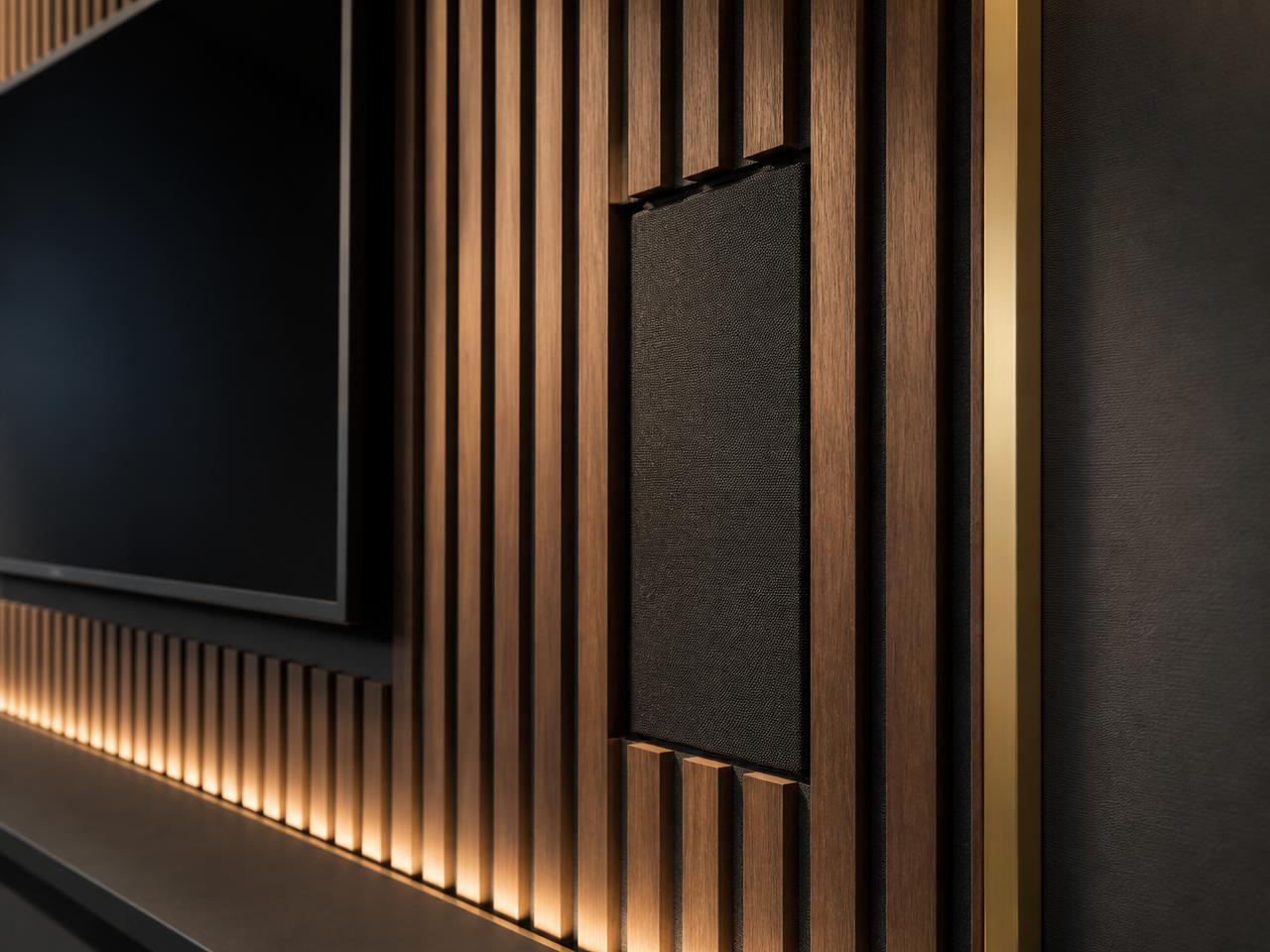
Specification we work to
- Panel build
- Solid or veneered slats on 9mm PET felt backing, on battens
- Typical module
- 2400 × 600mm panels, slat 20–40mm wide with 12–20mm gaps
- Absorption
- NRC 0.55–0.85 · αw up to 0.90 with a 50mm cavity and mineral wool
- Fire
- PET felt to Euroclass B-s1,d0 · timber FR-treated where required
- Finish
- Hardwax oil or lacquer, matched to the room's joinery
- Fixing
- Concealed batten or magnetic system so panels lift off for access
Where we use it
Media and TV walls
Absorbs screen reflections, hides cabling and speaker runs, and gives the television a considered surround.
Home offices
Ceiling rafts and a panel behind the desk make video calls sound closer and less echoey.
Open-plan living and dining
One treated wall takes the clatter out of hard floors and stone worktops.
Bedrooms
Upholstered or slatted headboard walls calm the room and soften noise from corridors.
Stairwells and hallways
Tall, hard, echoey volumes benefit most from a single full-height run of panelling.
Music and cinema rooms
A designed mix of absorption and diffusion, with bass traps concealed inside the joinery.
Want a room that sounds as good as it looks?
Send us the plan and photos of the room. We'll advise which surfaces to treat and detail the panelling as part of the joinery.